
STOP Data Centers
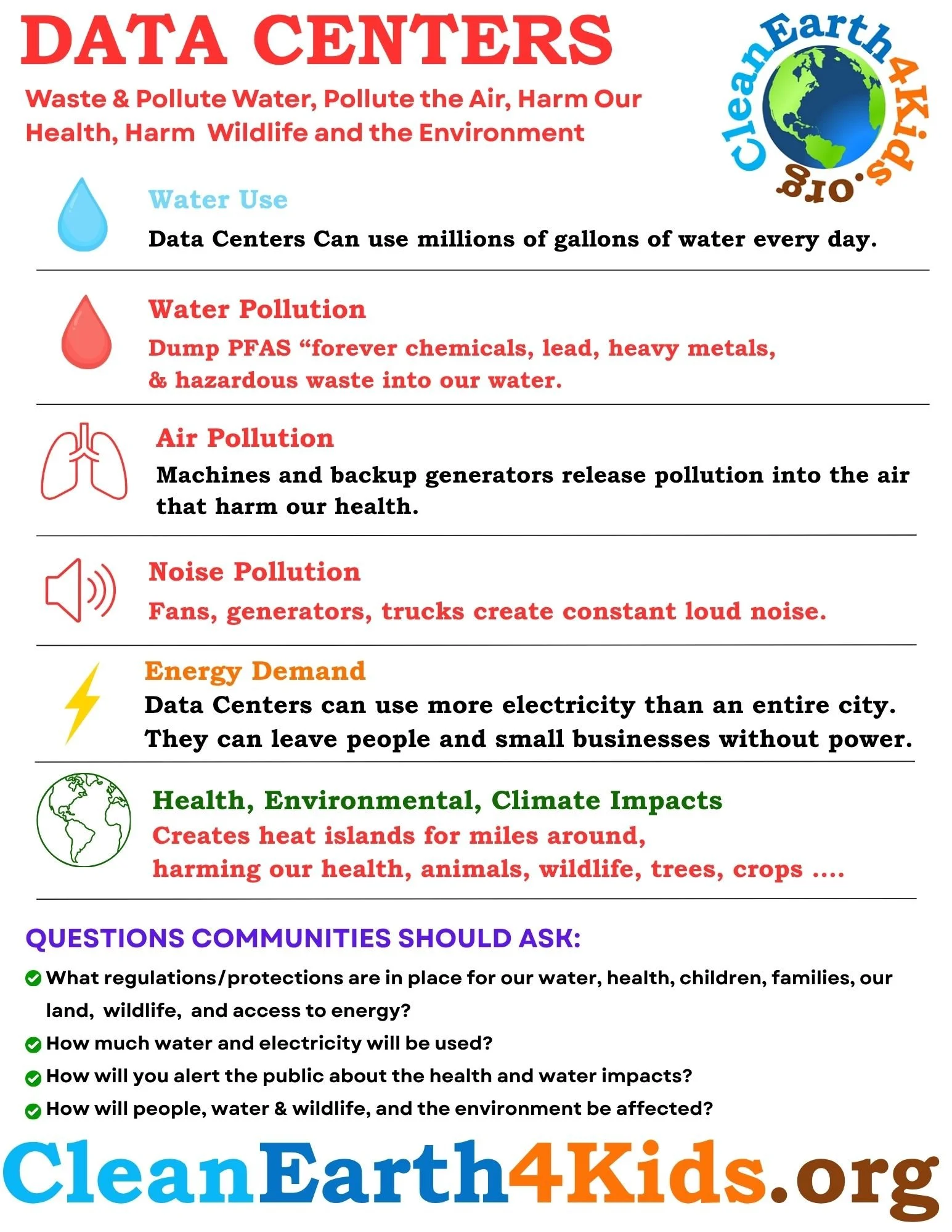
We have seen this business model before from coal companies: extract the resource, move the profit out of state, and leave communities with poisoned water, scarred land, and a repair bill taxpayers are still paying generations later. Data centers are running the same play….
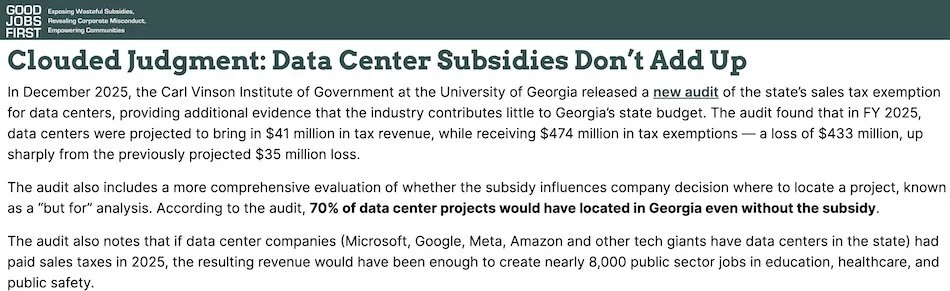
“The audit found that in FY 2025, data centers were projected to bring in $41 million in tax revenue, while receiving $474 million in tax exemptions — a loss of $433 million, up sharply from the previously projected $35 million loss.”
“The standard narrative is that data centers pay taxes, create jobs, and stimulate local economies. That is partially true. But in most states, data centers also receive substantial public subsidies, often before a single server goes online.
At least 37 states offer some form of tax exemption for data centers, most tied to sales taxes on equipment purchases. The scale of these programs has grown dramatically with the AI buildout.
Texas is projected to forgo roughly $1 billion in revenue in FY2025 alone. Virginia, home to the world’s most concentrated data center market, lost $732 million in 2024, equal to 42% of all economic development incentive spending by the Commonwealth that year. Illinois lost $371 million in 2023, a 628% increase from the year prior.
In Virginia, analysts estimate that roughly $267 million of that lost revenue would otherwise have supported K-12 public education statewide. Fairfax County Public Schools alone is estimated to have missed $38 million in a single year.
The other pillar of the economic development pitch is employment. And here, data centers face a structural limitation that has nothing to do with bad faith. They are capital-intensive and labor-light by design.
The most automated hyperscale campuses operate with as few as 20 to 30 permanent staff per 100 megawatts of capacity.A facility drawing 500 megawatts might employ fewer permanent workers than a large grocery store.
Anthropic announced a $50 billion data center investment in late 2025. The projected permanent employment: roughly 800 jobs. That works out to about $62 million in capital investment per permanent position. Outside Reno, a 1.1-million-square-foot Vantage Data Centers facility was projected to create just 73 permanent jobs over the next decade, even as more than 4,000 temporary construction positions cycled through the site. Virginia’s statewide data center investments from 2020 to 2025 averaged roughly $54 million per permanent job created.”

“…company said the facility is projected to use an average of 1.2 million gallons of water per day at full buildout, with a projected maximum of 1.6 million gallons per day. NorthMark previously reported the project would use about 459,000 gallons of water per day.
The company said the original figure came from a Phase I wastewater survey and did not represent the facility’s projected water demand at full buildout.”
Define Data Centers
“A facility, or portion of a facility, used or planned for use for the housing, operation, and/or co-location of computer and communication equipment and/or other associated components related to digital data operations for the purpose of storage, management, processing, and/or transmission of digital information.”
Reference from Atlanta, GA: “A facility engaged in the storage, management, processing, or transmission of digital data, which houses computer or network equipment, systems, servers, or appliances, and other associated components related to digital data operations.”
Reference from Chandler, AZ: “A facility or portion of a facility housing networked computer systems and telecommunications equipment used for remote storage, processing, and distribution of data.”
Reference from Londonderry, PA: “A facility used for the housing, operation, and/or co-location of computer and communication equipment for the purpose of storage, management, processing and/or transmission of digital information necessary for the operation of one of more business, commercial, or governmental entities.”
Examples of Bans:
Groton, Connecticut, banned any data center larger than 12,500 square feet.
All data centers were banned in the Beltline Overlay District in Atlanta, Georgia.
Examples of Moratoriums:
180-day moratorium on data centers in Coweta County, Georgia.
1-year moratorium on data centers larger than 5,000 square feet was passed in Groton, Connecticut
Groton later banned data centers larger than 12,500 square feet.
6-month moratorium in Prince George’s County, Maryland
Reject Proposals Without Adequate Transparency Measures
Example: Commissioners in Mooresville, North Carolina, refused to support a $30 billion data center project without knowing which company was behind it.
Ban the Use of Nondisclosure Agreements in Data Center Development Deals
Example: The board of trustees in Big Rapids Township, Michigan, approved a policy prohibiting employees and elected officials from signing NDAs around issues pertaining to the public interest or taxpayer funding.
Prohibit Rezoning Processes That Transform Agricultural Districts into Data Center Developments
Example: In Prince William County, Virginia, data centers are prohibited in agricultural districts.
Prohibit Variances and Special Use Permits
Prohibit Data Centers in Commercial and Mixed-Use Zoning
Institute Strong Noise-Mitigation Measures
Require Sound-Modeling Studies
Set Permissible Noise Levels
Divide County, North Dakota, established maximum continuous sound level for data centers during the daytime as 50 dBA, and 45 dBA at night.
Marana, Arizona, stipulates that maximum sound levels for data centers cannot exceed 55 dBA in residential and mixed-use properties during both daytime and nighttime.
Establish Application Process for Large-Quantity Water Users
Require all large-quantity water users to submit an application for substantial water usage. Cities reserve the right to determine that the applicant’s use would be incompatible with the city’s available resources and reject the application. Data centers are presumed rejected unless the developer is able to prove robust and effective water-sustainability measures.
Applications must include the data center’s projected water usage. Applicants are required to account for all water uses, including water used in data center construction, server cooling, facility cooling (including cooling towers), and other ancillary water uses. Most data center projections currently do not account for the water facilities will use to cool their infrastructure (including server cooling and facility cooling), which consumes a significant amount of water, as well as construction.
Regulate and Limit Energy Use
Mandate 24/7 Renewable Energy Requirements
Require that data centers procure or subscribe to locally deliverable, additional, and zero-emissions renewable energy at all hours of the day, every day of the year, as a condition for receiving approval.
Prohibit Off-Grid and “Behind-the-Meter” Power Generation
Implement Air Pollution and Community Health Measures
Prohibit Backup Diesel Generators
Require Pollution Control Equipment
Prohibit Exemptions from Emissions Standards
The information and examples above are from: https://datacenters.ainowinstitute.org/issue-area/bans-and-moratoriums/moratoriums/
Click HERE for Datacenter Policy, Moratorium, and Ban Examples at Local, State, and Federal
Click here for a list of moratoriums and bans by state
Bans and Moratoriums in Missouri, as of July 15, 2026
No statewide moratorium legislation.
St. Charles enacted a citywide moratorium and is considering a permanent ban
Kansas City and St. Louis enacted zoning restrictions, and Columbia froze permits.
Jackson County passed a 180-day moratorium (8-0) on June 22, 2026
Springfield followed with a 120-day administrative delay on June 29
Missouri landed two of the nation's largest 2026 data center announcements — a $15B Google campus and a $10B Amazon campus, both in Montgomery County.
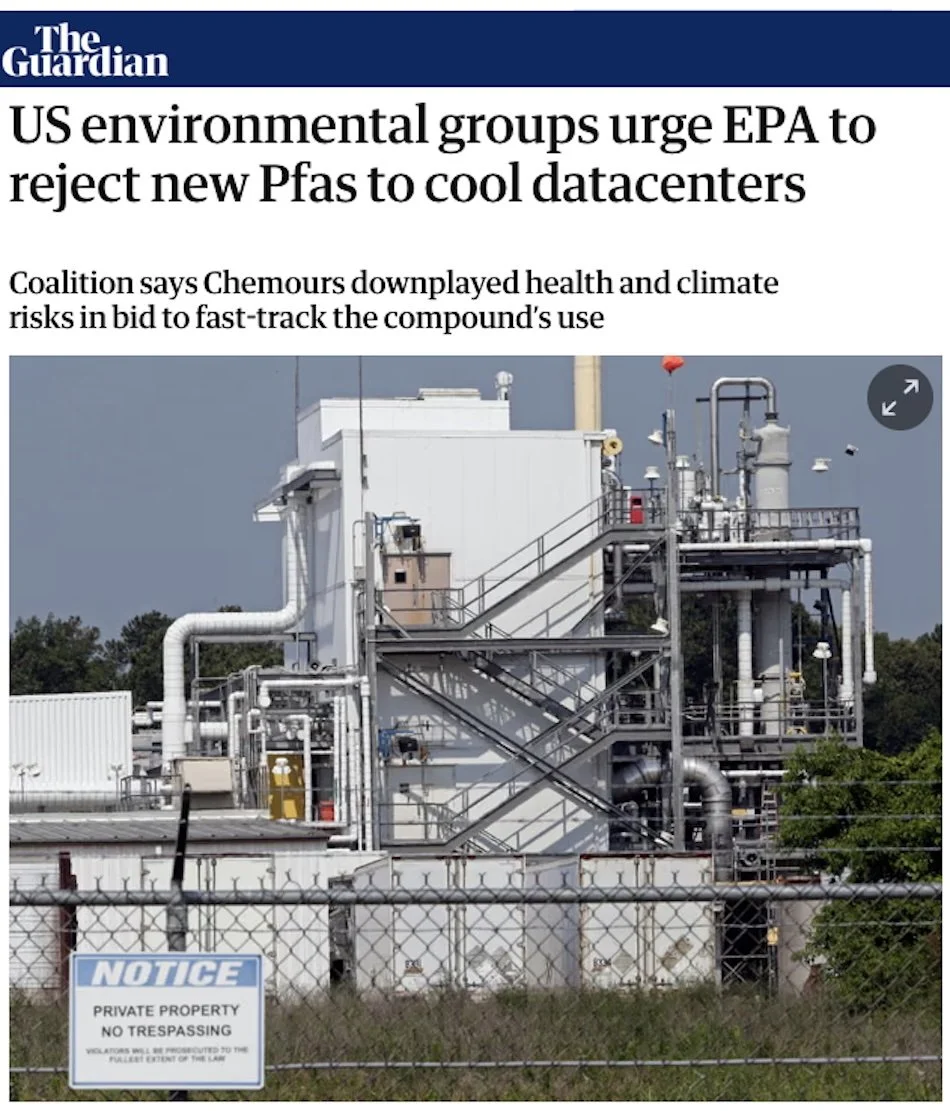
A coalition of 17 environmental groups is demanding the Environmental Protection Agency reject a new PFAS that chemical giant Chemours is attempting to fast-track for approval for use in cooling datacenters, and would almost certainly pollute regions around the facilities.
In formal comments submitted to the agency, the groups accuse Chemours of using bad science to downplay the chemical’s toxicity and climate risks.
Datacenter developers, like Google, have touted its two-phase cooling systems as an alternative that uses far less water, but few know that those typically use PFAS “forever chemicals” instead of water.
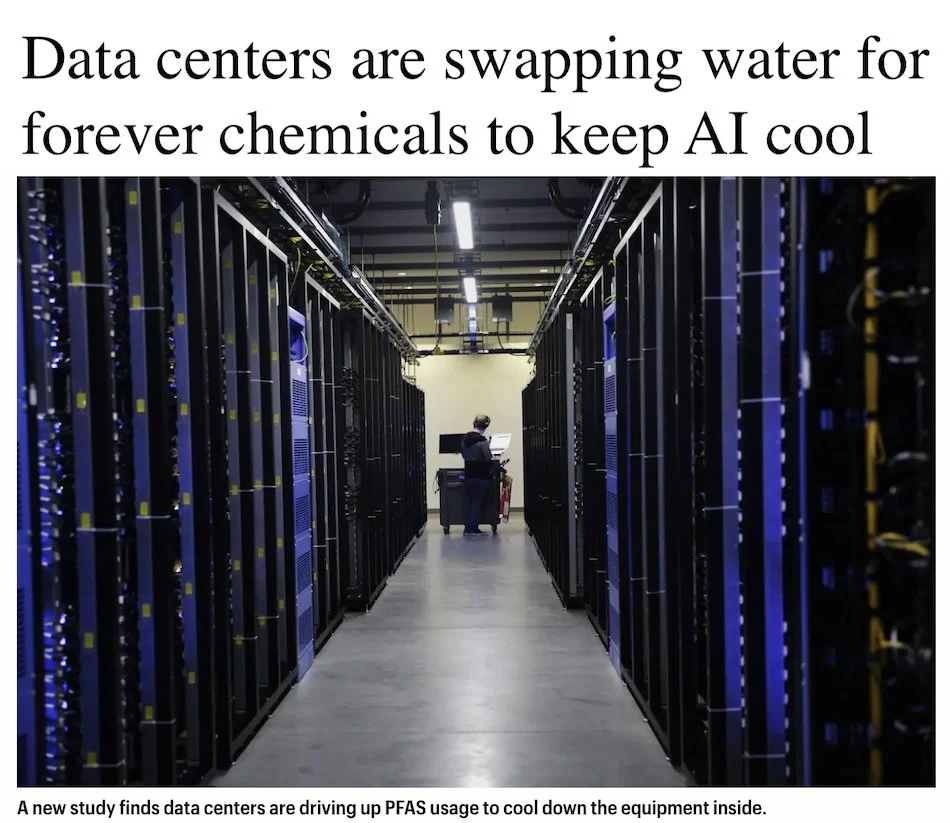
“Newer cooling systems in these facilities are using fluorinated chemicals that include PFAS instead of water. The world’s biggest makers of “forever chemicals” pulled in roughly $4 billion in profit in 2022, against an estimated $17.5 trillion a year in societal costs—healthcare, cleanup, contaminated water—according to an earlier 2023 analysis by ChemSec.”

“Officials in Wyoming said a contractor for Mark Zuckerberg’s tech company, Meta, flushed bacteria-contaminated water into public sewers during construction of a controversial new AI datacenter.
The incident prompted water authorities in Cheyenne to implement strict safety regulations on how wastewater from such projects is disposed of”
Data Centers Create Harmful Noise Pollution
The industrial machines of data centers produce continuous 24/7 noise spanning multiple frequencies. Research has found that anthropogenic noise can increase stress, disrupt sleep, and impact sleep, mental health, and cognitive performance, which can lead to poor school or work performance. These frequencies can propagate long distances, and while many are inaudible to humans, many animal species such as cows, have wider hearing ranges. Noise generated by data center operations can contribute to chronic stress in livestock and wildlife, as scientific studies have shown that prolonged exposure to elevated noise levels can increase stress hormone concentrations (e.g., cortisol and corticosterone), elevate heart and respiratory rates, disrupt feeding, breeding, and communication behaviors, impair immune function, and reduce overall productivity.
Infrasound (<20 Hz) and ultrasonic noise (>20,000 Hz) is the extremely high frequencies hat sit above the threshold of human hearing.
Tonal and low-frequency noise consists of continuous, often low-frequency hums between 50 Hz and 200 Hz, that are perceived as a distinct pitch, whine, or drone. It can be detected for several miles.
Vibration from cooling equipment, generators, pumps, and other mechanical systems can travel through the ground and nearby structures, affecting people and wildlife. Because it is not routinely measured in conventional noise assessments, vibration impacts may be overlooked during project review.
Data center noise is inadequately measured and monitored. Traditional noise ordinances typically rely on A-weighted decibel (dBA) measurements and may not adequately assess the low-frequency, tonal, infrasonic, impulsive, and continuous noise generated by hyperscale data centers. In addition, standard noise monitoring equipment does not capture the full range of these emissions, meaning facilities can comply with conventional noise limits while still causing significant community impacts.
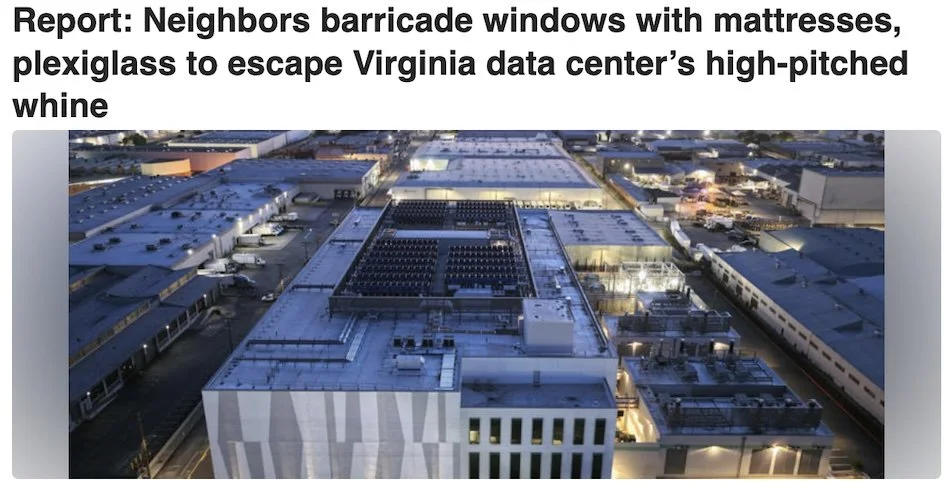
“Loudoun County stipulates that sound levels in residential and rural areas should not exceed 55 decibels and in mixed-use residential areas should not exceed 60 decibels at any time. However, the stipulations exempt “[s]ounds created by generators and accessory equipment operating during an emergency or at the request of a utility, and the testing of said generators and emergency equipment,” along with other exemptions.
“It’s right there, in all its glory,” resident Hari Doue said, alleging that the neighborhood was initially told that the data center was testing its generators to make sure they worked in case of an emergency. However, they have not been turned off since they were actived over a year ago, according to the resident.
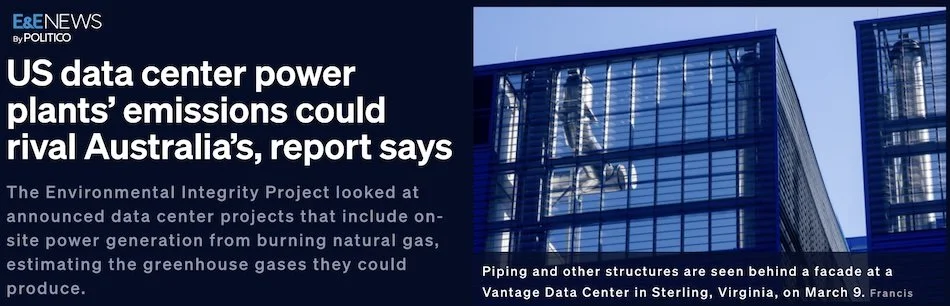
“United States data centers generating their own power could emit the same amount of greenhouse gases as the nation of Australia, according to a new analysis by an environmental watchdog group looking at proposed projects.
The report from the Environmental Integrity Project examined announced data center projects that include on-site power generation from burning natural gas. The report’s authors identified 74 such projects and then used computer models to calculate that the pop-up power plants, if built, could emit 662 million tons of greenhouse gases annually.
The facilities, which are expected to generate 143 gigawatts of power altogether, would also emit some 159,142 tons of health-harming air pollution, including emissions that can trigger heart and asthma attacks.”
Data Centers Increase Air Pollution
The American Lung Association’s “State of the Air” 2026 report identified data centers as an increasing source of air pollution concern due to both their electricity demand and diesel backup generators. Data centers rely on dozens of diesel generators that emit particulate matter, nitrogen oxides (NOₓ), and other pollutants linked to asthma, heart disease, and premature death.
MIT News states 60% of the increased electricity demands from data centers will be met by burning fossil fuels, with a Goldman Sachs report estimating increased global carbon emissions of about 220 million tons.
A report by Caltech and the University of California Riverside estimates data center air pollution will contribute to 1,300 premature deaths every year in the U.S. by 2030, disproportionately affecting certain low-income communities.
Research by Virginia Commonwealth University found data center air pollution in Northern Virginia has risen sharply as the number of facilities has grown.
“While intervening to support Elon Musk’s company, xAI, in a Clean Air Act lawsuit the NAACP brought against the company, the U.S. Department of Justice argued that xAI should be allowed to break the law solely because the Trump administration says so. The claim is a blatant attempt to take power away from local communities, the courts, and Congress and consolidate it with the Trump administration.”
“In the filing, the Department of Justice never disputes that xAI is pumping out unlawful and harmful pollution into Memphis and North Mississippi. Instead, the Department argues that it doesn’t matter whether xAI is breaking the law and threatening community members’ health if the Trump Administration blesses the lawlessness. While the Department points to vague national security concerns as its reason to let xAI continue to illegally pollute unabated, all companies, even ones that contract with the federal government, are required to follow the law”
Data Centers Increase Forever Chemical PFAS Contamination
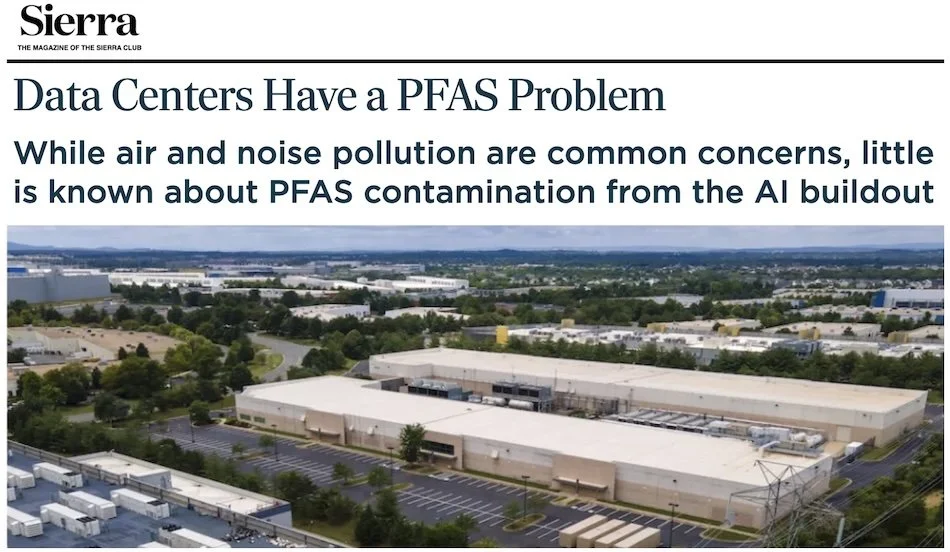
“Computers in data centers run hot, and they need to be kept from overheating. Excess water is often used to keep them cool.
So are PFAS chemicals.
“This is the most common way of cooling in data centers,” says Norbert Conrad, deputy director of the High Performance Computing Center in Stuttgart, Germany. “It's similar to how a fridge is cooled, just much bigger. You use a compressor and gases to cool air or water for the computers.”
These gases can escape into the air, where they accelerate climate change. Some PFAS gases used in cooling of data centers have global warming potential that is thousands of times higher than CO2's.
PFAS chemicals can also be used in a different form of cooling, using immersion. Computers are submerged in a chemical fluid to which the heat transfers. PFAS fluids for applications like this can leak or seep into water sources, where they find their way to drinking water or are used in agriculture.”
Data centers host tens of thousands of servers that run 24/7 and they require semiconductors, cooling systems, water treatment chemicals, and fire suppressants – all sources of PFAS forever chemicals. Many projects are using two-phase immersion cooling, which uses PFAS.
PFAS are persistent environmental pollutants linked to cancer, immune dysfunction, reproductive harm, and other serious health effects. The Environmental and Energy Study Institute reports that data centers are driving expanded PFAS material manufacturing that has already been linked to widespread drinking water contamination.
Chemours, one of the largest global producers of PFAS and one of the biggest suppliers of PFAS materials for data center coolants and semiconductor production (semiconductors are used to make data center microchips) stated in its 2026 Report, “The company aims to expand production of its PFAS materials, in particular resin for semiconductor manufacturing, to accommodate the growth of data centers across the country.” In 2026, the company reached a $450 million settlement for poisoning the Cape Fear, Delaware, and Ohio rivers with PFAS.
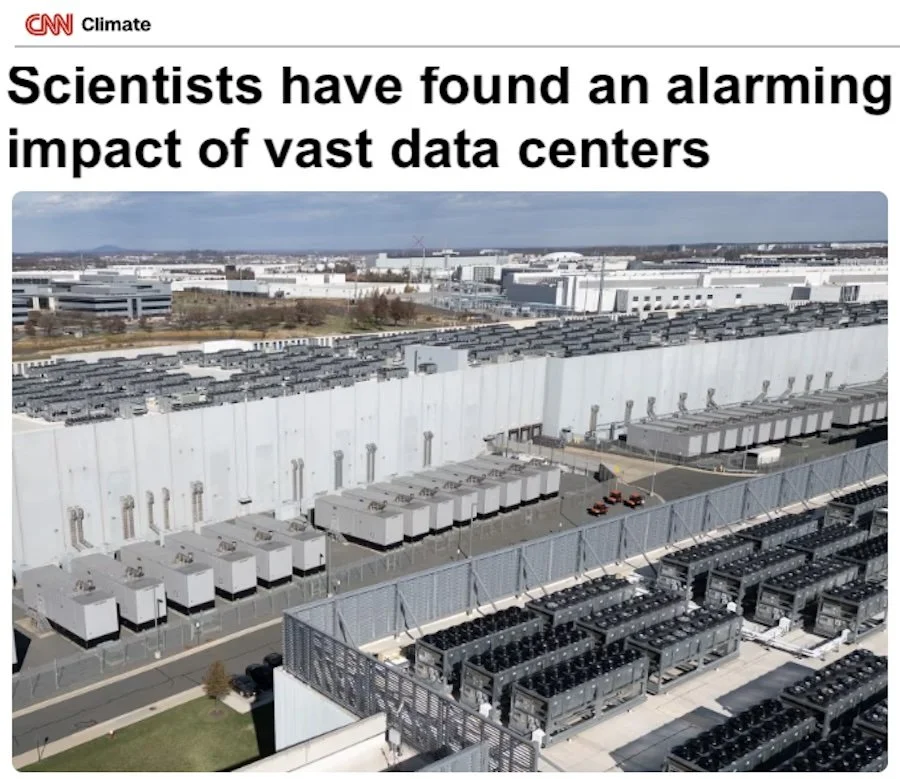
“The vast data centers that power artificial intelligence guzzle huge amounts of energy but they also have another alarming impact, according to new research. They are creating “heat islands,” warming the land around them by up to 16 degrees Fahrenheit, and making life hotter for more than 340 million people.”
“Strikingly, the impacts weren’t limited to a data center’s immediate surroundings; temperature increases affected areas up to 6.2 miles away.”
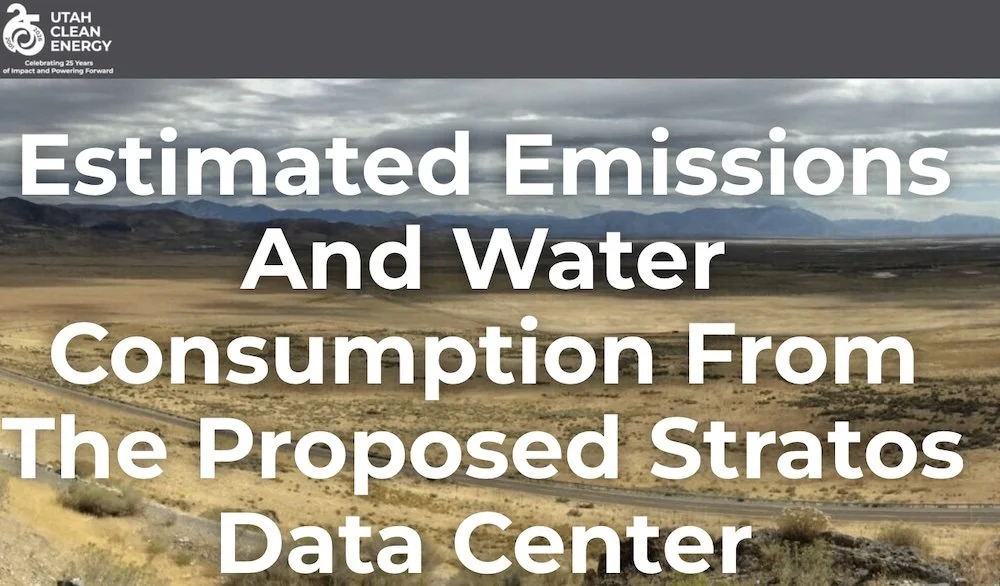
This single AI data center in Utah is a prime example of the problems these facilities are causing….
Stratos Data Center in Box Elder County, Utah, would cost $100 billion to build and use 9 gigawatts (GW) of electricity, generated entirely from on-site gas power plants, to power its operations.
This would nearly double the entire state of Utah’s electricity 2025 peak demand.
If the 9 GW of power is generated with a combined-cycle combustion turbine (CCCT):
Use about 448 billion cubic feet of gas per year, roughly 1.5 times more natural gas than the entire state of Utah currently uses across all homes, businesses, and existing power plants combined.
Produce 1,857 tons of NOx/year, ~5 times more than the entirety of Box Elder County’s industrial emissions
Produce 30.2 million tons of CO2/year, increasing the entire state’s CO2 emissions by 55%.
Use 16.6 billion gallons of water/year just to operate the gas turbines. This amount of annual water use would fill approximately 25,000 Olympic-size swimming pools.
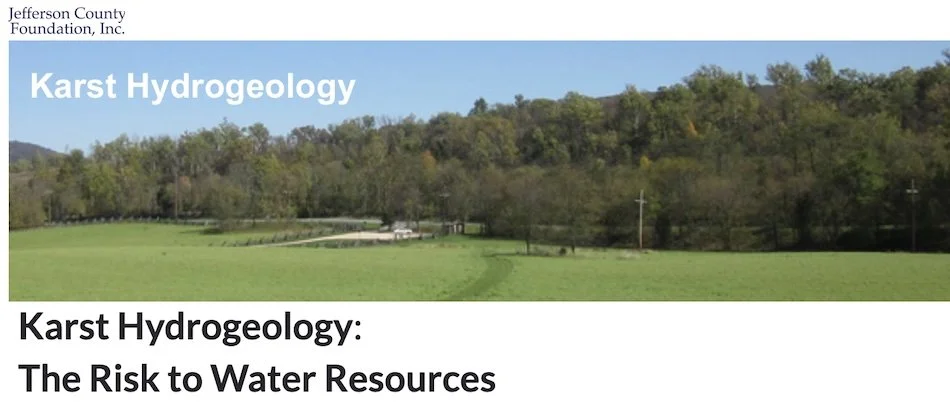
“A karst landscape is characterized by the presence of sinkholes, springs, caves, ridges and sharp projections in the underlying bedrock, and highly irregular soil-rock interface. The karst landscape is a consequence of the presence of soluble bedrock.'
Karst aquifers are known to be “extremely vulnerable to pollution,” due to direct connection between the surface and underlying high permeability aquifers.
The Jefferson Orchard site, and much of the surrounding land in Jefferson County, should not be rezoned for heavy industry, or any industry that produces toxic or hazardous emissions. The hydrogeologic characteristics of this portion of Jefferson County make it ill-suite to heavy industry. Water contamination from such activities at this site is not an obscure hypothetical, but quite likely.“
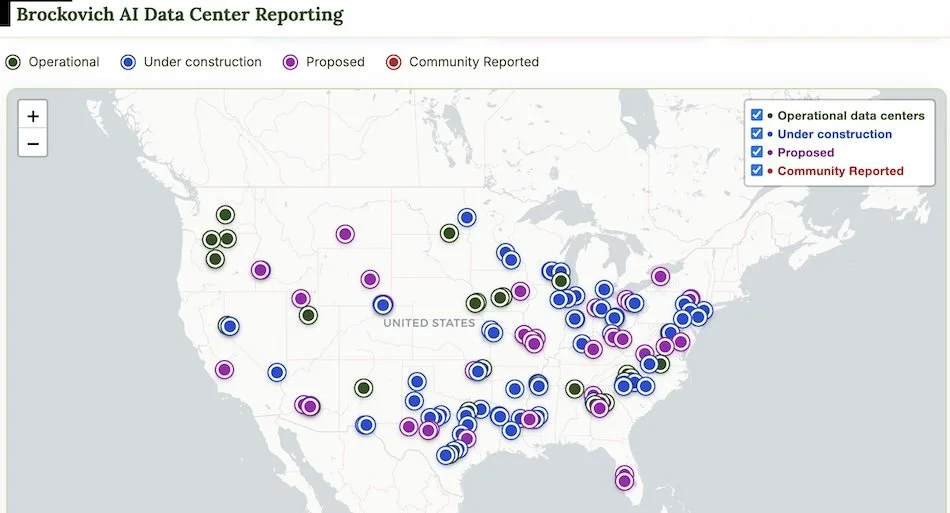
Click here for Data Center Map and other information about data centers
What Are Data Centers?
A facility, or portion of a facility, used or planned for use for the housing, operation, and/or co-location of computer and communication equipment and/or other associated components related to digital data operations for storage, management, processing, and/or transmission of digital information.
Micro facilities operate under 100-150kW, less than 5,000 square feet, 140 servers, and sit near end-users.
Small/Medium facilities operate 1-5 MW, 500-2,000 servers, and 5,000–20,000 square feet.
Large facilities operate 50-100 MW, 2,000-5,000 servers, and 20,000-100,000 square feet.
Hyperscale facilities operate over 100 MW, a minimum of 5,000 servers, and are often millions of square feet.
How much is 1 MW? Power for 500 to 1,000 average homes
How much is 5 MW? Power for 3,500 to 5,000 average homes
How much is 50 MW? Power for 35,000 to 50,000 homes
How much is 100 MW? Power for 80,000 to 100,000 average homes. Could power 1 mid-sized city
Hyperscale Data Centers
Hyperscale data centers hold massive amounts of high-performance computing and networking infrastructure, which uses a massive amount of energy to power and cool these systems. These data centers are commonly cooled by water, which is straining water supplies across the world.
These massive data centers strain water supplies, with the largest centers using 5 million gallons per day.
Many have on-site power generation and backup generators that emit greenhouse gases and air pollution, along with a loud, constant humming noise.
The widespread and growing use of AI has exponentially increased the power consumption by data centers, as AI usage and development models use a tremendous amount of energy.
Traditional CPU servers use 300-500 watts per server, whereas AI servers use 3,000-5,000 watts per server.
In 2023, 4.4% of all energy used in the United States was used by data centers and is projected to hit 12% by 2028.
The dramatic increase in energy consumption for AI is driving the construction of not just more data centers, but also energy infrastructure, including power plants that use fossil fuels.
The heat generated by hyperscaled data centers creates a huge “heat island” up to 16℉, warming the air up to 6 miles away, harming wildlife, plants, and crops.
Data Center Smoke and Mirrors
The hyperscaled data center boom is smoke and mirrors to make developers' money. The economics of these massive data centers don’t add up.
Research by MIT shows 95% of corporate AI projects fail to deliver meaningful returns on $40 billion in investments. Yet there are unprecedented AI infrastructure investments, with these investments exceeding the annual profits of many companies funding them.
There is a disconnect between AIs commercial value and the scale of investment.

Two speakers, both affiliated with CleanEarth4Kids, called for a total ban on data centers altogether. In addition to the environmental impacts, John Bottorff highlighted the potential economic impacts down the line, warning that the AI bubble is likely going to burst soon and cause greater problems than its 2000s predecessor, the dot com bubble.
He also pointed to other areas as a cautionary tale, both in how citizens are impacted and how developers skirt regulations.
"Please don’t destroy our environment and farmland for short-term gains for developers. We are already seen residents of towns and cities being told they don’t get water because the new data center gets priority. The same thing is happening for electricity," Bottorff said. "There’s also a documented history of these developers ignoring regulations, be it building their own power plants or just piping things in and dumping whatever. ... If the fine is cheaper than doing it right, they will pay the fine. They don’t care."
Suzanne Hume, founder of CleanEarth4Kids, expressed concerns about health impacts down the line.
"Are you all going to be responsible for helping children and pregnant women not get cancer from PFAS because our water is poisoned? Do you want to be responsible for that? Do you want to be responsible for lead and heavy metals?"
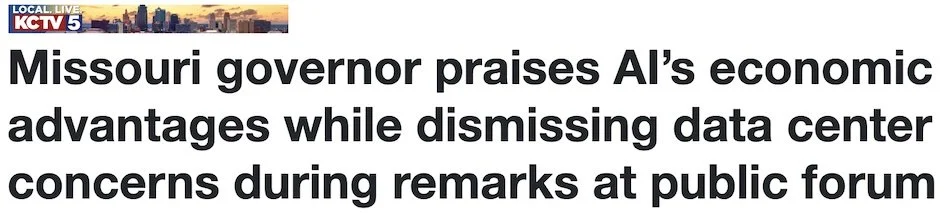
“Thinking about all of the pollution and harm to our water, our way of life, our air, our children’s health and future has us out here and wanting people to know about the harm,” said Suzanne Hume of Clean Earth 4 Kids.
Hume said Missouri needs to slow down on data centers until regulations can catch up.
“Missouri lacks regulations. We need statewide regulations in place and also we need ordinances at the city and county level,” Hume said. “We lose out time and time again as we try to protect our health and our future.”
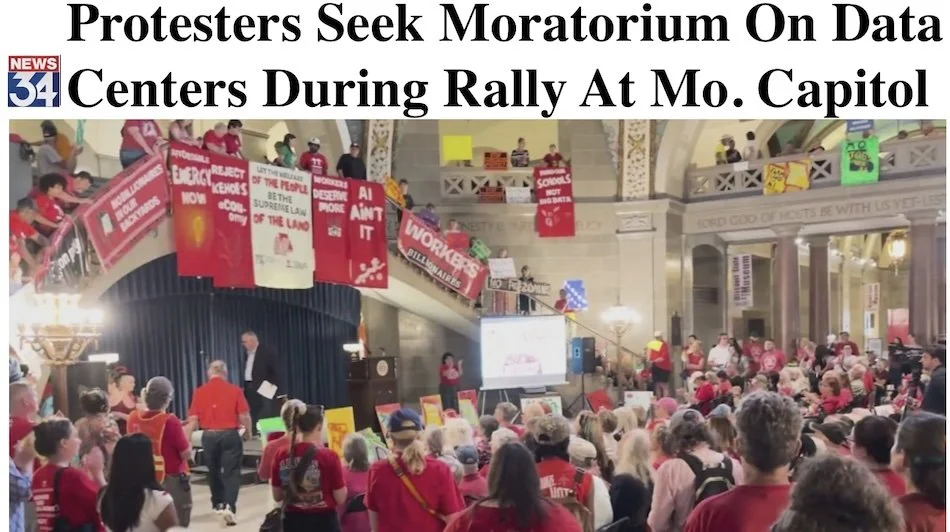
“I know the power of computers and A.I., but in our daily lives, we need to look at resources, our natural resources: land, water, our energy grid and the health effects it has,” said Nancy Zeliff, a retired computer sciences professor from Nodaway County.
The environment was a rallying point for many of the attendees.
“We want to stop data centers,” said Suzanne Hume, an organizer with a group called Clear Earth 4 Kids. “We want to protect our air, our water, our land and our children's health and future.”